Lucy
The Last BattleLucy’s final appearance in Narnia joins the tenderness that has marked her earlier adventures to a cosmic ending. As Queen Lucy, she welcomes the newly arrived King Tirian, recognizes the tragedy of the Dwarfs’ self-imposed prison, and asks Aslan to help them. She then witnesses the old world’s destruction and learns that the railway accident has killed her and the others in the Shadow-Lands; what seemed to be an ending is, for them, the beginning of the Great Story.
Identity and Return
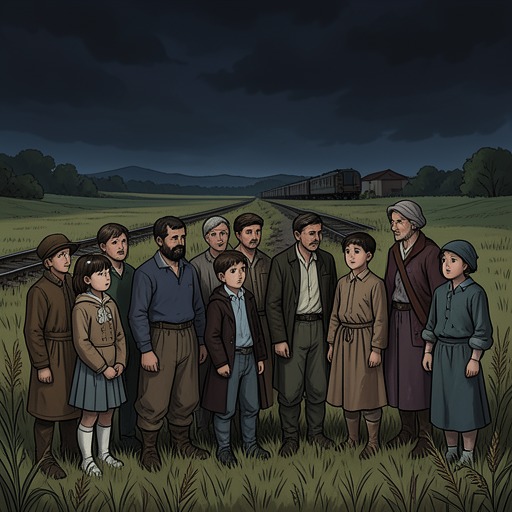
Lucy is one of the seven crowned Kings and Queens who appear before Tirian after Tash vanishes with the Tarkaan. Tirian recognizes her as Jill, Eustace, and the others’ companion, but now she looks fresh and composed rather than dusty and tearful. Her changed appearance is part of a wider transformation: Tirian, still imagining himself stained with the blood and dust of battle, discovers that he too is clean and dressed for a feast at Cair Paravel. The arrival makes the reunion feel less like a return to the old battlefield than an entrance into a different order of life.
Tirian knows Peter from a dream and greets him as High King. Peter then introduces Lucy alongside Queen Polly, King Edmund, and the other members of the company. Lucy’s place in this royal gathering does not make her distant from the people and creatures in need. When the company sees the Dwarfs, she says they are still alive and explains that she has repeatedly tried, unsuccessfully, to befriend them. Eustace objects that he knows how they have behaved, but Lucy asks him to stop and invites Tirian to see whether anything can be done.
The Last Journey to Narnia
Lucy’s return belongs to a journey the children had not planned in precisely the way it happened. Peter and Edmund had retrieved the Magic Rings, buried in the garden of a London house, so that Lucy and Eustace could use them: the older children could not come again, and Lucy and Eustace were still at school. Peter sent word that he had obtained the Rings, and the group arranged to meet the two schoolchildren on their way back to school.
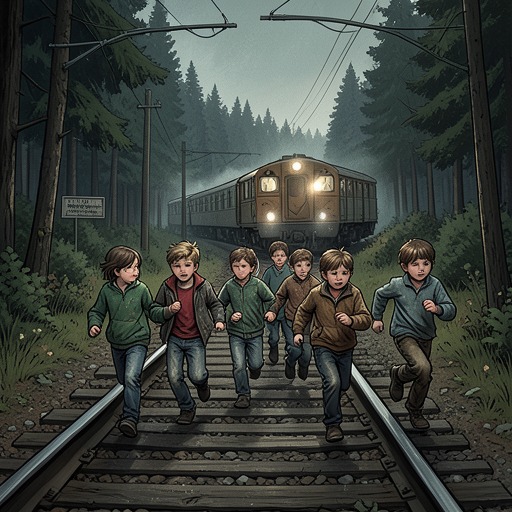
Lucy travelled with the Professor, Polly, and the others on the train, hoping they could remain together as long as possible. As she watched from the window for Peter and Edmund at the station, a violent jerk and noise interrupted the expected meeting. The travellers found themselves in Narnia, where Tirian was tied to a tree. The Rings had not brought them there; Lucy’s account establishes the abrupt transition from a planned attempt at passage to an arrival that occurs in the train accident itself.
Compassion and the Dwarfs
In the Stable, Lucy does not treat the Dwarfs’ refusal as a reason to abandon them. When Eustace hopes that Tash ate them, she corrects him: the Dwarfs remain present, and she has tried to make friends with them. Her appeal to Tirian follows the same impulse. Even after the Dwarfs have resisted liberation and harmed others, Lucy asks whether someone might still reach them.
That concern becomes explicit when Aslan appears. After he greets Tirian as the last King of Narnia who stood firm at its darkest hour, Lucy asks through tears whether he will do something for the Dwarfs. Aslan says he will show them both what he can and cannot do. He growls, but the Dwarfs dismiss the sound as a trick from the supposed gang at the other end of the Stable. He then places an abundant feast before them: pies, tongues, pigeons, trifles, ices, and wine. Yet the Dwarfs experience the food as hay, an old turnip, or a raw cabbage leaf, and call the wine dirty water from a trough. Their suspicion turns even abundance into deprivation; they begin to covet one another’s imagined better portions and snatch at the food.
Lucy’s request therefore reveals both the reach and the limit of compassion in the ending. Aslan can offer the Dwarfs good things, but he cannot make them accept what they have chosen to distrust. They insist that they have not been deceived and that the Dwarfs are for the Dwarfs. Aslan explains that their prison is in their own minds: their fear of being taken in prevents them from being brought out. Lucy’s kindness is not presented as foolishness, but neither can it overturn their refusal by itself.
Witness to the End of the World
After explaining the Dwarfs’ condition, Aslan leads the company to the Door. He roars first, “Now it is time!” and then calls “Time!” and “TIME.” The Door flies open, setting in motion the final sequence Lucy witnesses: the summons of the stars, the sorting of the creatures, and the destruction of the old Narnia.
A giant sounds his horn, and the sky fills with shooting stars, first by dozens and then by scores and hundreds. Lucy and the others realize that the spreading darkness is not cloud but emptiness: the stars are falling because Aslan has called them home. In Narnia, stars are people; they descend with silver-bright hair and shining spears, land among the company, and cast fierce light over the woods. Lucy stands among the witnesses as the familiar sky is emptied and its inhabitants gather at the Door.
The creatures of Narnia and beyond rush toward Aslan. Each looks into his face. Some turn away in fear and hatred; the Talking Beasts among them immediately cease to be talking animals, and those who reject Aslan disappear into the shadow to the Door’s left. Others look at him and love him, even when frightened, and enter on his right. Among those Lucy sees again are Roonwit, Jewel, Farsight, Poggin, the Dogs, the Horses, and other creatures thought dead. The scene gives her compassion a larger setting: entry into the renewed country is not simply a matter of returning to familiar companions, but a judgment in which each creature’s response to Aslan determines its direction.
When the dying sun and moon merge in fire, Aslan tells the giant to make an end. The giant squeezes the sun in his hand, and darkness falls. The world’s termination is not a restoration of its former political order. Lucy and the others witness the old creation reaching its end, while the gathered company waits beyond the Door.
The Great Story
Aslan finally tells Lucy and the others that the railway accident was real and that they, along with their parents, are dead in the Shadow-Lands. He names their transition not as a defeat but as a change of condition: “The term is over: the holidays have begun. The dream is ended: this is the morning.” Lucy’s passage from the train to Narnia and from the dying world into Aslan’s country thus belongs to a final movement beyond mortal life, not to an excursion from which she will return to her former home.
The narrator says that Aslan no longer looked like a lion as he spoke, but does not describe what followed in detail; those events are too great and beautiful to be written. The closing distinction is between the end of the stories as readers have known them and the beginning of the company’s real story. Lucy’s adventures in Narnia and her life in the other world become, in retrospect, only the cover and title page of a story that continues forever, with each chapter better than the last. Her final role is at once personal and structural: she is among the children who learn what their journey meant, and her presence helps make the ending a threshold rather than a full stop.